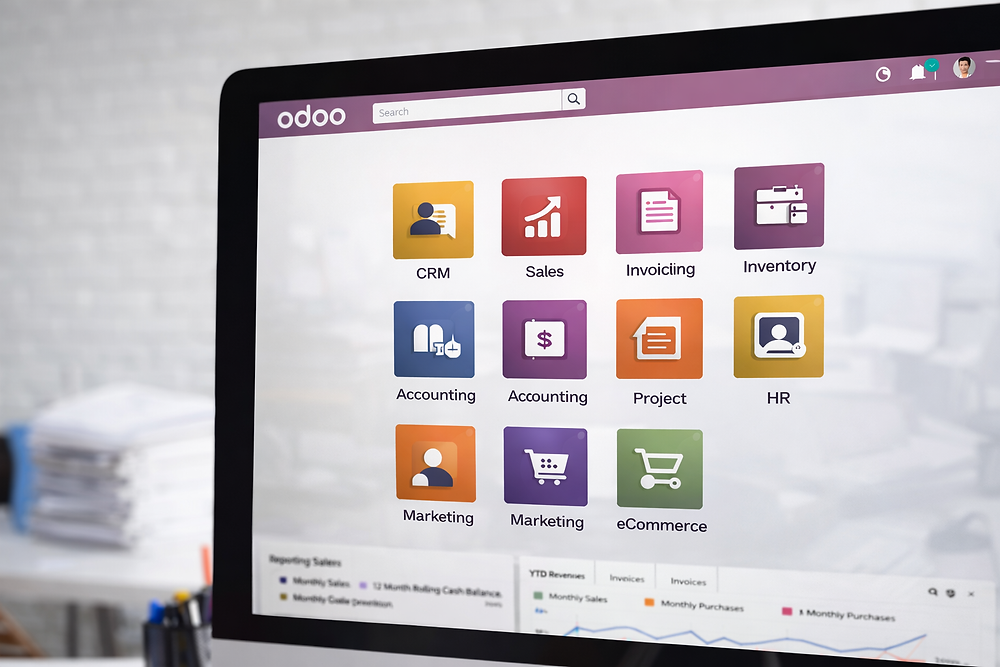
Managing a business often means juggling several software tools for different tasks like accounting, inventory, customer relations, and more. This can lead to inefficiencies, data silos, and higher costs. Odoo all-in-one business software offers a solution by combining many essential functions into a single platform. This post explores how Odoo ERP for business management can replace multiple business tools, making operations smoother and more connected.
What Makes Odoo ERP System Different?
Odoo is not just another ERP software. It is a modular system designed to fit the needs of small and medium businesses (SMEs) by offering a wide range of applications that work together seamlessly. Instead of buying separate software for CRM, accounting, inventory, and project management, Odoo combines these into one platform.
- Modular design allows businesses to pick and choose only the apps they need.
- Integration between modules means data flows smoothly without manual entry.
- User-friendly interface reduces the learning curve for teams.
- Open-source foundation offers flexibility and customization.
This approach reduces the need for multiple subscriptions and complex software setups.
How Odoo Replaces Multiple Business Tools
Many companies use different software for each business function. For example, they might use QuickBooks for accounting, Salesforce for CRM, and Excel for inventory tracking. Odoo replaces these with one system that covers:
- Customer Relationship Management (CRM) to track leads and sales.
- Accounting with automated invoicing and financial reports.
- Inventory management to monitor stock levels and orders.
- Sales and purchase management to handle orders and suppliers.
- Project management for task tracking and collaboration.
- Human resources including employee records and attendance.
By using Odoo, businesses avoid switching between tools and reduce errors caused by manual data transfers.
Benefits of Using Odoo for SMEs
Small and medium businesses face unique challenges like limited budgets and resources. Odoo business management software offers several benefits tailored to these needs:
- Cost savings by replacing multiple paid tools with one affordable solution.
- Scalability to add more modules as the business grows.
- Improved efficiency through automation of routine tasks.
- Better decision-making with real-time data from integrated modules.
- Customization to fit specific industry requirements.
For example, a retail SME can use Odoo to manage sales, inventory, and accounting all in one place, saving time and reducing errors.
Odoo Modules Explained
Odoo’s strength lies in its wide range of modules that cover almost every business function. Some key modules include:
- Odoo CRM: Manage customer interactions, sales pipelines, and marketing campaigns.
- Accounting: Automate billing, track expenses, and generate financial statements.
- Inventory: Control stock levels, manage warehouses, and track shipments.
- Manufacturing: Plan production, manage bills of materials, and track work orders.
- Human Resources: Handle recruitment, payroll, and employee evaluations.
- E-commerce: Build online stores integrated with inventory and sales.
Each module connects with others, so data entered in one area updates related functions automatically.
Business Automation Using Odoo
Automation is a key advantage of Odoo ERP implementation. Tasks that once required manual input can now run automatically, such as:
- Sending invoices after sales orders are confirmed.
- Updating inventory levels when products ship.
- Generating reports on sales performance.
- Scheduling follow-ups with leads in the CRM.
This reduces human error and frees employees to focus on higher-value work.
Why Businesses Choose Odoo ERP Over Multiple Tools
Choosing Odoo over multiple standalone tools offers clear advantages:
- Unified data reduces inconsistencies and improves accuracy.
- Simplified IT management with one system to maintain.
- Lower total cost of ownership by cutting software licenses and integration costs.
- Faster onboarding since employees learn one platform.
- Flexibility to adapt as business needs change.
Companies that switched to Odoo often report smoother operations and better visibility into their business.
Odoo for Small and Medium Businesses
Odoo is especially popular among SMEs because it balances power and affordability. Unlike large ERP systems designed for big corporations, Odoo fits smaller budgets without sacrificing features. It supports growth by allowing businesses to start small and add modules over time.
For example, a growing service company might begin with CRM and project management modules, then add accounting and inventory as needed.
Getting Started with Odoo ERP Implementation
Implementing Odoo ERP requires planning to ensure it meets business needs:
- Identify key processes to automate and integrate.
- Choose the right modules for your business.
- Train staff on using the system effectively.
- Set up data migration from existing tools.
- Monitor performance and adjust configurations.
Working with experienced Odoo consultants can help smooth the transition and maximize benefits.